Monday, 7 July 2014


Vincent O'Halloran - traditional musician who brought the West of Ireland to London

(a slightly edited version of this was printed in the Irish Times of July 5th 2014)

by Anton McCabe

Vincent O’Halloran – Born September 3rd 1942, died Mary 11th 2014

Vincent O’Halloran, who has died after a long battle with cancer, was a master of the accordion, and a fine traditional singer, whose gifts made him a fixture on the Irish traditional music scene in London. A native of Inishbofin, Co Galway, he lived his adult life in England.

He was a mainstay of London’s Irish traditional music scene from the 1960s. Traditional music was part of the glue that held the Irish community together in his early days there. Large numbers came to sessions, as places where the Irish gathered.

O’Halloran had both the musical ability and the personality to make a session lively and enjoyable. Wherever he played, he brought the west of Ireland to London. He was an energetic, strong and accurate accordion player. He played jigs and reels with theatrical flourish, but his speciality was waltzes, especially the Cuckoo Waltz. Reg Hall of Topic Records heard him at sessions, and persuaded O’Halloran to make his only record, ‘The Men of the Island’ with his brother Dessie (O’Halloran).

However, his most spectacular performance was while perched on a rock in Inishbofin Harbour. He had gone out in a currach, and climbed up on the rock.

Vincent O’Halloran was born on Inishbofin in the September 1942, youngest of nine children to Martin O’Halloran, a shopkeeper and retired member of the Royal Irish Constabulary, and his wife Jane (née Prendergast). Inishbofin was a musical island, the O’Hallorans part of that music. His mother was a concertina player. As a child, his eldest brother, Christy, taught him the accordion.

His primary education was in the island’s national school, followed by secondary education as a boarder at St Mary’s College in Galway. Soon after secondary school, he moved to London, working as a carpenter. Except for a few years in Swindon, London was home for his adult life. Until shortly before his death, he regularly played at a couple of sessions in South London.

Three weeks before his death he paid his last visit to Inishbofin. Despite his frailty he played a powerful session in the Dolphin Hotel with a group of other island musicians.

Vincent O’Halloran is survived by his daughter Bridie: son Vincent: sisters Mary Joe and Bernadette: brothers Malachy and Desmond (Dessie): four grandchildren and one great-grandchild. He was predeceased by his wife Kathleen, and son Michael.


Wednesday, 2 July 2014


Sir John Gorman - Obituary. An edited version of this was published in the Irish Times of June 7th

by Anton McCabe

Sir John Gorman – born February 1st, 1923, died May 26th 2014

Sir John Gorman, who has died, was the only Catholic to be a senior elected Unionist representative in the North since World War Two. He was an Ulster Unionist representative, first to the Northern Ireland Forum in 1996, then from 1998 to 2003 to the Northern Ireland Assembly. He chaired the Forum, and was the Assembly’s Deputy Speaker. He was a respected Forum chair. When disorder erupted he became slightly red in the face, gave the unruly a headmasterly look over the top of his glasses – and was obeyed.

He was earlier a war hero, winning the Military Cross for bravery in World War Two.

John Reginald Gorman was born in February 1923 outside Omagh, Co Tyrone, eldest of four children to Jack Gorman, a Royal Ulster Constabulary (RUC) District Inspector, and his wife Annette (née O’Brien), both Catholics, Munster natives, and strong Unionists. 

Gorman was educated at the Loreto Convent, Omagh: Rockport School, Co Down: the Imperial Service College in Windsor, England: and Portora Royal School in Enniskillen. At 18 he joined the British Army and was commissioned a lieutenant, landing in Normandy a fortnight after the D-Day landings. Gorman won the Military Cross by driving his tank straight down a hill, ramming a better-armoured German tank, and putting it out of action.

After the War he followed his father into the RUC, entering as a District Inspector.
During the IRA campaign of the 1950s, he liaised with the authorities in the Republic in drawing up lists of suspects to be interned. He also carried out liaison between MI5 operating in the North and MI6 in the Republic.

With the IRA campaign over, he took on new challenges at the British Overseas Airline Corporation (now part of British Airways). There he was successively Head of Security: Head of Personnel: Manager for the USA: and Manager India, Bangladesh, and Sri Lanka. He refused the position of Manager Southern Africa, because such meant building relations with white minority regimes.

After nearly 20 years, he returned to the North in 1979 as Chief Executive and Deputy Chairman (a combined post) of the Northern Ireland Housing Executive. He was proud to have left a high quality housing stock on retirement.

He is survived by hi wife Heather: daughters Angela and Rosanagh: son Johnny: grandchildren and great-grandchildren. He was predeceased by his son Justin.

Saturday, 21 June 2014


Noted local historian dies

(A slightly edited version of this obituary was published in the Irish Times, May 17th 2014)

by Anton McCabe

Seamus Harkin – born April 2nd 1935, died May 2nd 2014

Seamus Harkin from Creeslough, Co Donegal, who has died after a short illness, was a historian of his home area, and a collector of its folklore. He was also a musician, songwriter, undertaker, and community activist.

Harkin was born near Creeslough in March 1935, third of five children to Hugh Harkin, a small farmer, and his wife Annie (née Harkin). His formal education in Faugher National School ended at 14. He worked first as a farm labourer: for the Forestry Commission: then with Donegal County Council. He progressed to becoming an insurance agent. That job forced him to develop his writing skills.

He left insurance for the first of his life’s callings, as a solo entertainer playing the pub scene. He combined this with writing songs. One of his last was ‘There is no towbar on the back of a hearse’. The guitar was his life-long instrument. As he became older, he also played the fiddle increasingly: that had been his father’s instrument. He collected and restored old fiddles.

In the 1980s, he learnt how to use a computer. This was after a local national school obtained its first computers.  He attended the few introductory classes, then worked to  develop his skills.

That opened the door to a career as a writer. His work dealt with the life of his home area. It included an edition of the English and Irish works of local poet Niall Mac Giolla Bhríde: Harkin’s own autobiography “It took a lifetime”: and ‘Hallowed Halls’, a book of photographs of every church of every denomination in the diocese of Raphoe.

Round the time he was familiarising himself with computers, he found his third calling. The undertaker in Creeslough died and he took over the business. He had the skill of being able to find the right words of comfort at a difficult time.

Harkin was a man of many other parts. In his community, he worked to develop housing for the elderly, and a day centre, and keep Faugher National School open. In 2011 he was Donegal Rehab Person of the Year. Last year, he was Age Action Silver Surfer of the Year, recognition of his status as a digital native.

He is survived by his wife Tessie; daughter Edel and sons Leo, Mark, Paul and James; sisters Mary and Nora; and brother Hugh. He was predeceased by his son Paschal and brother John.


Monday, 5 May 2014


What future for Irish language journalism?

(A slightly amended version of a piece first published in The Irish Journalist, March 2014)

by Anton McCabe

Irish language journalism is facing serious difficulties, with there being no stand-alone national Irish language weekly paper. Three newspapers have been closed over the past half-dozen years after Foras na Gaeilge (the Cross-Border Irish language body) withdrew funding.

The Foras is currently examining applications for the contract for an Irish-language weekly online newspaper. All material is to be available free. According to application documents, it must be “primarily based on written reporting and written comment,” and provide both national and regional news. This contract would last for four years. The successful publisher will receive €300,000 per year.

Between 2008 and 2013, the Foras ended the contracts of three newspapers.

First to go in 2008 was the daily Lá Nua, published by the Belfast Media Group. The publishers proposed that it made economic sense to make it available free online, rather than distributed as a paid-for title through shops. The Foras rejected this. “If the plan to publish Lá Nua online is proceeded with, this equates to breaking the contract with Foras na Gaeilge, and if the contract is broken Foras na Gaeilge will not be able to continue with the agreed funding,” Foras Chief Executive Ferdie Mac an Fhailigh said at the time.

Connemara-based Foinse was a casualty the following year. In 1996 it won the tender to provide a weekly newspaper. It achieved significant name-recognition, and was recognised as providing high-quality journalism. At one stage it sold 4,000 copies per week However, it ceased publication for a time in 2009 in a funding dispute with the Foras.

Foinse applied to extend its contract for a further four-year term. However, this was awarded to Gaelscéal, a joint venture between the Connacht Tribune and Eo Teilifís. The Gaelscéal bid had proposed a target of 6,000 weekly sales within three years. This sales target was clearly unrealisable: Foinse, despite building up name recognition, had not achieved this in more prosperous economic times. An added obstacle to the sales target was that, as a condition of the contract, Gaelscéal was to make the paper available online free of charge three days after publication. When awarding the contract in 2009, Mac an Fhailigh said the standard of applications was very high: “We are pleased to offer the contract to Torann na dTonn Limited, a joint venture between the Connacht Tribune and Eo Teilifís, who have years of experience in the Irish media.” At the start of last year, the Foras withdrew the contract from Gaelscéal – on the basis that the sales target had not been met. It would be fair to say that Gaelscéal had not been to everyone’s taste, with an emphasis on hard news. There was an undercurrent of criticism from some in the Irish language community who saw aspects of its coverage as too controversial. The Foras subsequently launched a period of public consultation regarding future publications.

In further moves at the end of June, the Foras to end funding for monthly magazines Feasta and an tUltach, and news and information website Gaelport.

These closures leave Irish as one of the few significant European minority languages without a stand-alone weekly newspaper. The Irish Times publishes a broadsheet page each Wednesday. This suffers from the drawback of only being one page: and by the Irish Times not having the Northern market penetration it once had. Also on Wednesdays, the Irish Independent publishes ‘Seachtain’ as an insert. It benefits from having some experienced journalists, though has  to concentrate on the schools’ market. It suffers from the Independent’s weak penetration in the North.

In this situation trade unionists must be concerned about the number of journalists’ jobs that have been lost.

There must also be wider societal concerns. The existence of a media is important for any language and culture to develop. According to the censuses of 2011, over 40% of people in the Republic have some knowledge of Irish: and almost 14% in the North.

Irish language broadcasting is reasonably healthy, but there is a need for the written word. In promoting that, there is no evidence of a consistent strategy from the Foras. As Oscar Wilde said: "To lose one parent may be regarded as a misfortune; to lose both looks like carelessness."

It takes time for a print title, or website, to gain recognition. With no stand-alone Irish language weekly for the past year, the readership has lost the habit of buying a paper, and it will take time for them to develop the habit of logging into the new online paper.

This will have to bring together a new staff. Those who worked on Lá Nua, Foinse and Gaelscéal have mostly scattered. New journalists will need time to build up contacts, and develop an understanding of the issues in the Irish language sector. As a freelance contributor to Gaelscéal from its inception, I know the difficulties the (mostly) inexperienced staff faced in doing so. They were successful, but hampered
by the lack of continuity.

That lack of continuity will hamper Tuairisc, the new online newspaper. The Foras is funding this, and it is due to go online in late summer – with there being no newspaper in the 18 months since Gaelscéal closed.

This gap is particularly unfortunate as there are issues regarding the Irish language that are of particular interest to the Irish language community (to the extent such exists), and have to be examined. These are issues such as education, and whether a ‘total immersion’ (in Irish) approach is best, or a bilingual approach: the status of Gaeltacht areas: and the future of Irish-language ‘Third Sector’ organisations after the Foras’ ‘Samhail Nua Maoinithe’ (New Funding Mode).

Given its particular situation, Irish language media mostly needs subsidisation. This is not unique in the media. RTÉ and BBC are both publicly-funded because of their public service remit. The Broadcasting Authority of Ireland’s Broadcasting Funding Scheme was established to ‘provide funding in support of high quality programmes on Irish culture, heritage and experience’, and adult literacy, to local commercial and community stations. The sums involved in funding Irish-language media are small, and add to the cultural richness and diversity of society.


Declaration of interest: I have worked for Lá Nua, Foinse, Gaelscéal and An tUltach.

Sunday, 20 April 2014


Linda Ervine - on a journey with the Irish language 

(first published An tUltach February 2014)

le hAnton Mac Cába

Ar Bhóthar Bhaile Nua na hArda Íochtarach i mBéal Feirste, tá múrmhaisithe dílseacha ar go leoir beann tí, brat na Breataine ar foluain.

Ar an bhóthar seo tá tionscadal nua Gaeilge, An Turas, a spreag Misean Oirthir Bhéil Feirste den Eaglais Modhach. Buaileann Linda Ervine liom ag doras Lár-Ionad Skainos, lár-ionad trasphobalach a spreag an Misean. Tá Linda ina hOifigeach Gaeilge ag an Mhisean. Tógann sí aníos mé chuig an dorchla atá ag An Turas, dorchla mar a bhfuil na comharthaí as Gaeilge, an-bhród uirthi astu.

Más bean bheag í Linda, tá an-fuinneamh innti. Rugadh agus tógadh í in oirthear Bhéil Feirste, gan móran teangmhála aici leis an Ghaeilge. “Ach, cosúil le go leoir Protastúnach, bhí riamh rud beag suime agam ann,” ar sise. Bhí fhios aici gurb ann dó. “Is dócha go raibh mé orthu siúd a shíl gur ‘trá’ a bhí ar achan trá i nDún na nGall,” ar sise, ag gáire.

Trí bliain ó shoin, d’eagraigh an Misean cúrsa trasphobalach sé seachtaine le blaiseadh a thabhairt ar an Ghaeilge, Gàidhlig, agus Ultais. Chuir an cúrsa sin casadh ina saol. “Thit mise i ngrá leis an Ghaeilge,” ar sise. “Sin an t-aon dóigh amháin go dtig liom cur síos air.” I ndiaidh di an blaiseadh seo a fháil, chuaigh sí ar dian-cúrsa ar An Droichead ar Bhóthar Ormeau i mBéal Feirste.

Agus Linda ag freastal ar ranganna ag an Droichead, d’fhoilsigh roinnt nuachtán an scéal go raibh, mar gur deirfiúr céile David Ervine í.  Luadh Misiún Oirthir Bhéil Feirste, beart a bhí ina ábhar imní. “Ansin, tháinig rabharta glaochanna fóin – an dtig linn clárú sna ranganna Gaeilge agaibh?” ar sise. Níorbh ann do na ranganna.

D’iarr an Misean uirthi bheith ina h-éascaitheoir. Cuireadh rang ar bun, gan poiblíocht. Tháinig scór, an seomra ró-bheag dóibh. Mhol Cearál Ní Cuilín di buaileadh le Foras na Gaeilge, rud a rinne. Cruthaíodh post mar Oifigeach Gaeilge leis an Mhisean, post a fuair Linda ag deireadh 2012. Nuair a thosaigh sí, bhí rang amháin ann. Anois, tá seacht gcinn.

Tá an Ghaeilge mar chuid dá ndílseachas ag roinnt daoine sa cheantar. Ní mar sin d’achan duine. “Tá eagla ar dhaoine thart anseo roimh an Éireannachas,” arsa Linda. “Ní thuigeann siad cad is Éireannachas ann. Smaointím ar Phrotastúnaigh mar Éireannaigh go ndearnadh dearmad orthu.” Ní mar sin a bhí cúrsaí i gcónaí. “Sula ndearnadh an Críoch-Deighilt, ní raibh fadhbanna ag Protastúnaigh leis an Éireannachas, d’amharc siad orthu féin mar Éireannaigh,” ar sise. Tá siad ag rá gur coimhthigh ina dtír féin iad nuair a deir siad gur ‘Breatainaigh’ iad. “Is seo mo thír dhúchas,” arsa Linda. “Rinneamar an tír seo. Is Éireannach mé, b’fhéidir go bhfuil mé Breataineach chomh maith. Tig liom bheith Éireannach agus Breataineach san am céanna.”

Tá sé tábhachtach go mbeadh Protastúnaigh “ag athseilbhiú dúchas s’acu.” Dream go bhfuil níos mó muiníne acu astu féin, ní bagairt atá sa Ghaeilge, ach “faraor, níl an muinín sin ag achan duine.” Tá daoine ag fiosrú a gcúlra féin, ní ag tiontú ina bpoblachtánach. “Agamsa, rinne sé mo nasc leis an phobal Protastúnach níos láidre ar bhonn dearfach, chuir sé mé níos mó ar an eolas faoi cé agus cad é mé féin,” ar sise. “Ní Caitliceach, ní Poblachtánach mé, ní aontachtaí láidir mé, ach tá mo chreideamh Protastúnach iontach tábhachtach agam, agus tig liom rudaí a fheiceáil atá i gcoitinne agam le daoine sa phobal náisiúnach, ach tá fhios agam go bhfuil difríochtaí ann chomh maith.”

Ba turas casta trín saol a rinne Linda féin. Bhí a tuismitheoirí sa Pháirtí Cumannach, an teaghlach oscailte do smaointí difriúla. Thosaigh sí ar an mheánscoil in Ardscoil Grosvenor “ach iarradh orm go múinte imeacht, ansin chuaigh mé go Baile Nua na Bréadaí – mar ar díbríodh mé.” Scar a tuismitheoirí, a h-athair ina chónaí i gCill Uaighe in iarthar Bhéil Feirste “agus chuaigh mé go dtí Cross and Passion ar Bhóthar an Ghleanna.” Chuaigh sí ansin go Scoil Idirmheánach Park Parade “mar ar díbríodh mé chomh maith.”

B’shin deireadh lena scolaíocht oifigiúil. Chuaigh sí ag obair mar glantóir. Bhí sí torrach agus í 15, saolaíodh an céad páiste aici agus í 16. Sna 80idí, bhí triúr páistí uirthi, agus a fear céile díomhaoin.

D’fhill sí ar an oideachas sna lár-90idí “go díreach le rud éigean a dhéanamh, le fáil amach as an teach. Thug sin mé ar aghaidh chuig an GCSE, agus ba A-anna ar fad a fuair mé sa GCSE.” Faoin am seo, ba seanmháthair í.

Rinne sí A-Léibhéal, go deachaigh go Ollscoil na Ríona, go ndearna céim le Béarla. Go dtí sin, b’áit é Ollscoil na Ríona “le bheith ina aicearra go Oispidéal na Cathrach.” Tháinig athrú mór ar a saol, nó cháiligh sí mar mhúinteoir meánscoile, í ag teagasc ina ceantar dúchas féin.

Baineann sí úsáid as a táithí saol féin ina cuid oibre. Tá An Turas ann “le seans a thabhairt do dhaoine ón bpobal Protastúnach, ón lucht oibre Protastúnach, an Ghaeilge a fhoghlaim. Mar, an pobal Protastúnach, ní raibh fhios acu go raibh na h-áiteanna seo ann mar a mbeifeá ábalta dul agus Gaeilge a fhoghlaim.”

Fuair sí amach go raibh Gaeilge ina cúlra féin. Céad éigean bliain ó shoin, bhíodh sean-tuismitheoirí a fir céile, Brian Ervine (ceannaire ar an Pháirtí Aontachtaigh Forásaigh), agus a dheartháir, David Ervine, ina gcónaí i gceantar Bhóthar Bhaile Nua na hArda Íochtarach. “Nuair a chuamar isteach i ndaonáireamh 1911, fuaireamar amach go raibh Gaeilge acu,” ar sise. B’as ceantar Ráth Fraoileann dóibh, as pobal tuaithe a labhair Gaeilge.

Ar a bealach féin, tháinig sí ar thuiscint ar an dóigh gur sheachain Protastúnaigh an Ghaeilge ar an ábhar go bhfaca siad ceangal leis an pholaitíocht. “Sheachain mé an tUltais mar go raibh sé bainte le Protastúnachas, le hAontachtachas, ach anois, trín Gaeilge, tháinig mé ar meas agus grá don Ultais chomh maith, don fíor-Ultais, ní don rud seo a chum na polaiteoirí,” ar sise.

Dar le Linda go bhfuil buntaiste mór leis an Ghaeilge. “Sílim gur tháinig mé ar an leigheas ar uaigneas agus dúlagar, agus is é an Ghaeilge é,” ar sise. “Tá rud sóisialta ann, cuireann pobal na Gaeilge an-fáilte roimh daoine. Ní saol mór é, mar sin nuair a théann tú isteach ann, cuireann tú aithne ar dhaoine go gasta. Is rud é go dtig leat dul ann leat féin. Is saor in aisce, nó saor go maith, atá tromlach na n-imeachtaí. Tig leat dul amach gach oíche sa tseachtain.”

Ní raibh fadhb leis an Ghaeilge ach uair amháin i Lár-Ionad Skainos, nuair a bhí seastán ag An Turas. “Bhí an fear seo, agus bhí sé iontach tógtha,” arsa Linda. “Ghlac mé leis gur Protastúnach é. Agus ansin nuair a dúirt sé ‘An teanga sin, bhris sé croí páistí, bhí orthu é a fhoghlaim’ – thuig mé gur faoi féin a bhí sé ag caint.” Ba Chaitliceach é.

Chomh maith le Gaeilge, tá an Chríostaíocht mar chuid tábhachtach dá saol. Níor tógadh mar Críostaí í. Ach bhí sí ar an dé deiridh le droch-sláinte agus “ghuigh mé ar feadh na laethanta chun an Dé seo nár chreidh mé ann.” D’éirigh leis na h-urnaithe sin, nó “Tháinig mé ar rud a séanadh orm, go raibh mé naimhdeach dó, gur athraigh sé mo shaol.”


Friday, 28 March 2014

Scott Fizgerald and Fermanagh


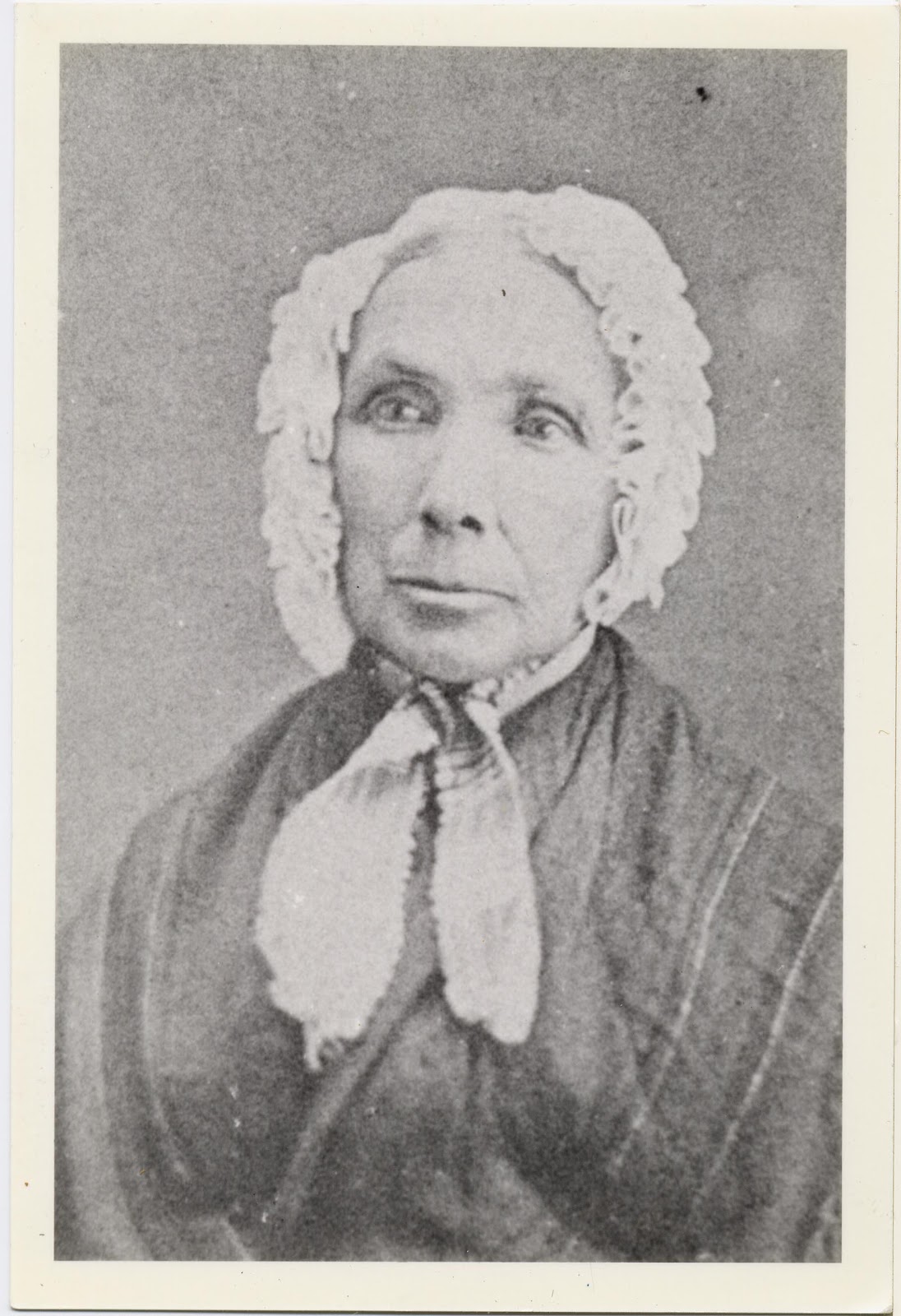
This woman looks at us across nearly two centuries. She links places, generations, and traditions of literature. Her great-grandson, Scott Fitzgerald, would become one of the writers who defined the 20th Century. This woman was born towards the end of the 18th: the picture was taken sometime in the later part of the 19th. Mary (Molly) Neeson was born in south Fermanagh. It is unsure whether it was Galloon, Clones, or Roslea Parish. From the age of her older children, we know she married into the McQuillan family as a young woman.

This is a picture of a a lucky woman. She left Ireland two years before the Famine was to destroy the population of Galloon Parish, where she lived. The death rate was similar to the worst areas of Mayo and West Cork. The population of Drumgallon townland fell 50% from 1841 to 1851. In 1843, she emigrated from Drumgallon, near Donagh to the USA with her sons, except John (we don't know if some stayed behind): her daughter (we don't know if there were other daughters who stayed behind): and her brother James Neeson. Of her husband, we know little. Did he die in Fermanagh, on the voyage, or in the USA? Philip was the youngest of the sons accompanying her.

Molly McQuillan's son John was already in Galena, Illinois. It was a lead mining centre on the Mississipi River, and a centre for immigrants from Fermanagh. These McQuillan emigrants were like the most Irish immigrants to the USA at the time: middling farmers, squeezed by the agricultural recession after Britain's wars against France.

The family settled in Galena. All except one didn't become rich, but the New World was better for middling farmers.

One son, Philip, die become rich. In his early teens, he began work in a shop. Half a dozen years after, he moved to the growing city of St Paul - and became one of its richest man. His daughter, Molly, was named after her grandmother.

This Molly's son was Francis Scott Fitzgerald, the chronicler of the USA in the 1920s. He wrote of the upper middle classes on the East Coast: then, when debt, drink, and literary fashion all conspired against him, of struggling screenwriters in Hollywood.

It was a life far different from the hill townland of heavy land three or four miles north of Newtownbutler where his great-grandmother raised his grandfather. A townland where his grandmother was part of the decision for the family to sail from Derry to the New World. That decision meant her youngest son became grandfather of the writer - rather than joining so many of his former neighbours in a Famine grave.


Friday, 21 March 2014


Training in social media

Today I'm at a union training course in Belfast on the use of social media.

The course is most useful. It is excellent that the trade union movement provides training for members. Currently, social media is a major way in which people interact. Trade unions have to use it to communicate with our members.

Importantly, as trade unionists we have to understant the pitfalls. What is online is public.

Employers use social media to spy on workers. So beware what you post about yourself. The phrase 'digital natives' is used about young people. Too often, they are digitally naive - in the extreme, blundering in cyberspace - ignorant they are being watched.